
The Perils and Pleasures of Pairing
A group of sommeliers from around the United States, Canada and Mexico spent last week in Sonoma County tasting wines, touring vineyards, and competing in a time-honored contest of skill and creativity – food and wine pairing.
The Court of Master Sommeliers describes somms as “leaders of pristine wine service and cultivators of an elevated dining experience” who in addition to wine service, “use their skills and knowledge to create wine lists, coordinate food pairings, facilitate wine education, and more.”
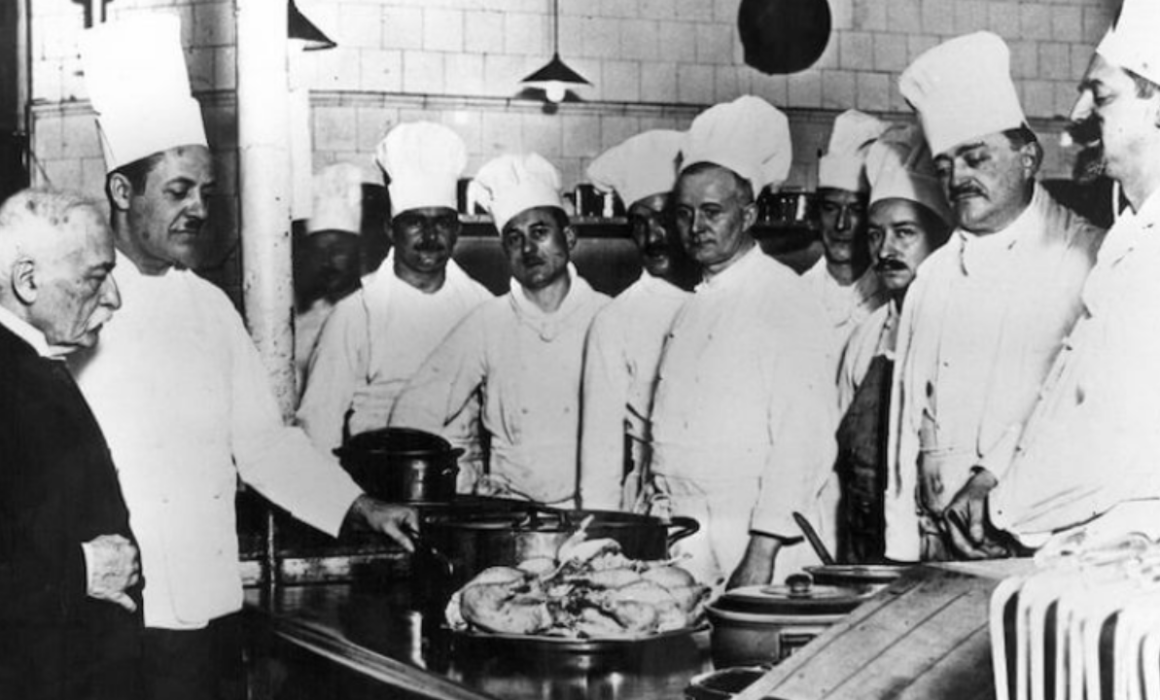
But while food pairings have probably existed since the dawn of fire and the ability to cook over flame, our modern understanding of food being able to enhance wine and wine being able to enhance food can be largely tied to a man by the name of Georges Auguste Escoffier, born in 1846 in Villeneuve-Loubet, France.
Escoffier toiled as a young man in his uncle’s restaurant, a new concept at the time, a place for people to eat that wasn’t an inn, tavern, where meals were served communally, or private kitchen, which only existed for the upper if not monarch class.
In Paris he worked for Le Petit Moulin Rouge. He then went to London to transform the restaurant at the Savoy Hotel with Cesar Ritz, the two later also turning the restaurants at the Paris Ritz and Carlton London into destination showpieces of their own. In 1910, he came to New York City for the opening of the Ritz-Carlton there.
Along Escoffier’s way, new dishes were created and codified systems put in place to deliver higher-quality dining experiences, known today as the Brigade System, which established a hierarchical chain of command within busy kitchens that kept them more hygienic and safe (and for this, we are grateful).
This is where “Yes, Chef” was born. Escoffier had been an army chef during the Franco Prussian War and saw lessons in efficiencies and responsibilities that could engender calm into a chaotic kitchen environment.
The Dining Room Brigade complemented those in the kitchen, consisting at a minimum of a Maître D, sommelier, head waiter, and busboy. Thus, it became the job of one (or more) dedicated person to select and buy wines, print a wine list, help diners with their wine choices, and open, decant, and serve the wines.
This reflected Escoffier’s deep belief that food and wine were completely connected and that when paired well, the dish and the wine would complement and enhance each other. His changes to French cuisine at this time reflected this philosophy, Escoffier simplifying many of the recipes and techniques of his forebears such as Antonin Careme, a big name in early French cuisine, who had cooked for kings and czars.
It is also Escoffier who is credited with delivering food in courses rather than all at once, which had been the norm. With this new gradual way of enjoying a meal, Escoffier developed brighter, cleaner flavors, paired foods and wines from within regions, emphasized the need for wines to cut through fatty, weighty foods, and advocated for matching the weight of a dish with the weight of a wine.
Escoffier retired in 1920 and lived until 1935. His legacy lives on in myriad ways, including via the Auguste Escoffier School of Culinary Arts in Austin and Boulder.
There, a new wave of sommeliers is ditching some of the rules of its namesake, and those who contributed to an oft-unfortunate archetype of stuffy French service, making wine more about joy, flavor, and community.
According to the school, “today’s somms are flipping the script… swapping intimidation for conversation and making wine feel personal, creative, and fun. Whether they’re pairing wine with tacos, breaking down Champagne versus Prosecco on TikTok, or spotlighting local wines, they’re reshaping how we talk about – and teach – wine.”
Such transformations include becoming part guide, part storyteller, part friendly resource, less “keepers of deep, often intimidating wine knowledge,” more “professionals (who) treat wine like a conversation, not a competition.”
Boding even better for a region like Sonoma County is this Escoffier School advice to students: “Don’t overthink it. Start with what’s in front of you. Taste a wine, ask where it’s from, who made it, how it was grown, and then start asking about how it pairs with food you know… It’s the human side and the nature side, too.”
