
Celebrating Cider and the Humble Apple
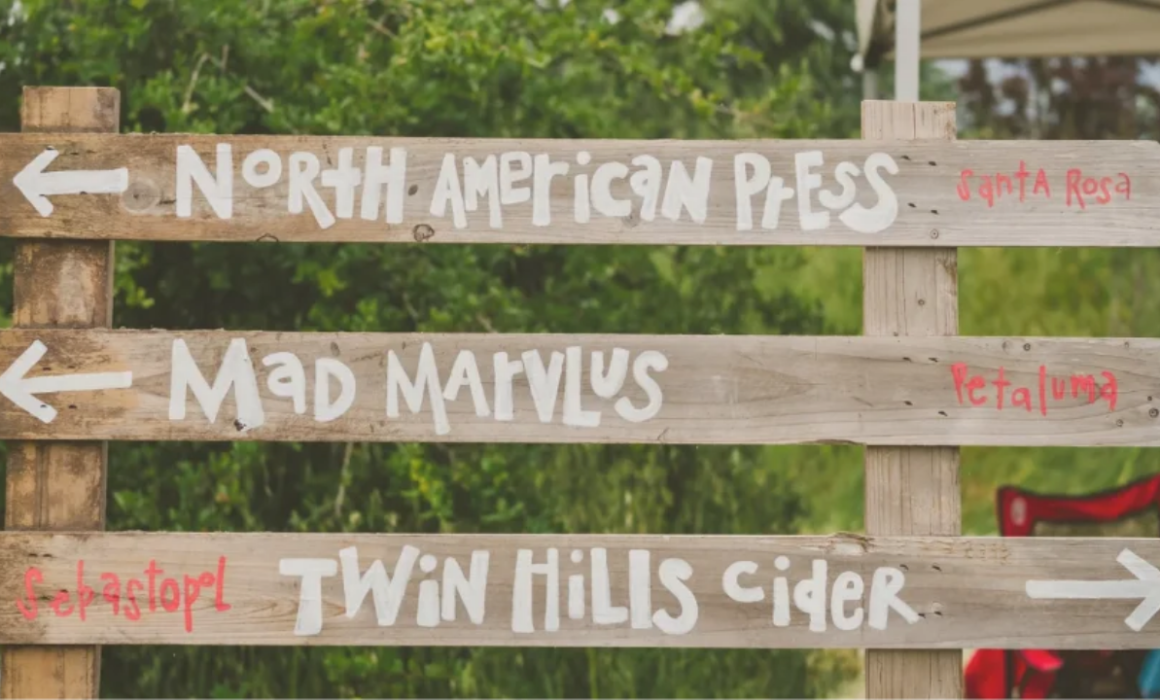
On Saturday, October 24 in Petaluma, the second annual Cider Circus comes to town, Sonoma County’s first and only festival celebrating artisanal ciders and liqueurs from Sonoma County producers and beyond.
Among the participants are local wineries that make cider like Horse & Plow and Old World Winery. But mostly there will be singular-minded cideries in attendance, making this a great chance to learn and taste what locals are up to when it comes to putting one of Sonoma County’s most important crops, the humble apple, to fine use.
And important it is. The 2025 Sonoma County Crop Report documented that, “Apples had their highest tonnage harvested since 2016, a 67.3% increase in apple tonnage brought to market compared to 2024. Misty spring rains and mild temperatures were the perfect recipe for fruit set. Overall, the value of apples increased by 54.7% compared to 2024.”
Apples are million-dollar crops in Sonoma County. In total, 1,352 bearing acres of Late Varieties Apples (fresh and processed) were worth $3,864,100 in 2025, while Gravensteins (fresh and processed), of which there are 614 bearing acres, brought in $2,166,900.
Horticulturist Luther Burbank was among the most significant proponents of the Gravenstein apple in particular, praising it in his writings as a vigorous tree and reliable bearer that was superior for both eating and cooking. He once famously declared, “if the Gravenstein could be had throughout the year, no other apple need be grown.”
He loved the variety so much that in the late 1890s at his experimental farm in Sebastopol, Burbank introduced the Winterstein, a sweet apple derived from Gravenstein seedlings that ripened much later in the season.
The University of California Master Gardener Program of Sonoma County has a fascinating historical timeline of the Gravenstein’s possible origins. Early colonists in Massachusetts first started planting apple varieties in the early 1600s, using seedling trees rather than grafting. The resulting apples were mainly processed for storage by drying, cooking and making cider. By 1669, there were 92 apple varieties in the colonies.
Fast forward a couple of hundred years and “John Chapman, aka Johnny Appleseed, was very influential in spreading apple seedlings throughout the eastern and midwestern United States in the early 1800s,” the timeline details. “By the mid-1800s, farmers began to select for fruit quality and grafted the varieties they liked best. By the late 1800s there were 643 apple varieties. Today, there are about 7,500 varieties.”
While the Gravenstein apple specifically is of unknown origin, it is known that it arrived in Denmark in the 17th century after being discovered at a French monastery by Danish Count Carl Ahlstedt, who brought branches back to be grafted at his family’s Grasten Palace. It is named after that place.
It is then believed to have been brought to Fort Ross by Russian fur traders, who planted a Gravenstein tree on the site in 1811. Gravensteins are now grown in Denmark, Norway, Austria, Australia, Canada and the United States, mostly here in Sebastopol. Apple sauce and dried apples from western Sonoma County famously helped feed the troops during World War II.
The Gravenstein persists today in many forms, as do many other types of apples across Northern California. Cideries are among their champions.
Ambix Spirits is an apple and pear-focused wine, brandy and liqueur producer based in Sebastopol, which planted its own orchard in 2019. Ethic Ciders is also in Sebastopol, farming its own apples and sourcing from other growers in the area. Its signature bottling is Golden Rule, a blend of Golden Delicious apples and local organic heirloom apples. It also makes Gravitude from 90% Gravensteins and 10% Jonathan and Rhode Island Greening apples. Scarlett is a seasonal cider made from local apples, blackberries, and raspberries.
Dutton Estate Winery in Sebastopol also celebrates Sonoma County’s apple-growing heritage with its Hard Apple Cider. Made from heirloom Gravenstein and Golden Delicious apples grown at the family’s Dutton Ranch, the sparkling cider balances sweetness and tartness while honoring generations of family farming in western Sonoma County.
Etteilla is a partnership between two best friends who worked harvests in Sonoma, South Africa, and Australia before coming back to California to make zero-zero wines and more. Its products can be tasted at Dos’ Bar in Sonoma off the Sonoma square near a Pinot Noir vineyard it is currently farming.
Goat Rock Cider is all about ciders and wines made in Petaluma from apples and wine grapes grown at Devoto Gardens and Orchards in Sebastopol. Its Norcal Nectars are fruited ciders with three ingredients: apple juice, fruit and Hawaiian honey. It also holds seasonal Cider Making Workshops.
Horse & Plow along Highway 116 in Sebastopol makes both wine and cider, the ciders single-varietal from apples grown nearby. Russian River Valley-based Old World Winery in Fulton is also a dual wine-and-cider producer. Trowbridge Apple Cider is its cider, made from blending Johnathan, Granny Smith, Golden Delicious, Winesap and King apples with pear and quince, wild-fermenting it all in barrel over 10 months.
Onirique Cider is in Sebastopol, where it farms ancient apple trees as well as forages from neighbors. The cidery is the project of Jeremy Retornaz, who worked in Normandy making Calvados before seeing the enormous potential of Sonoma County for cider.
He makes a Gravenstein cider in summer, his only single-varietal cider from multiple orchard sites, the Recolte Automnale in autumn, and Recolte Hivernale in winter, from late-season varieties, each intended to express what he calls the “pomological terroir” of West Sonoma County.
The long history and importance of apples in Sonoma County is well worth celebrating. Check out the Cider Circus this week and don’t forget next year’s Gravenstein Apple Fair, another chance to honor one of the stars of Sonoma County agriculture.
