
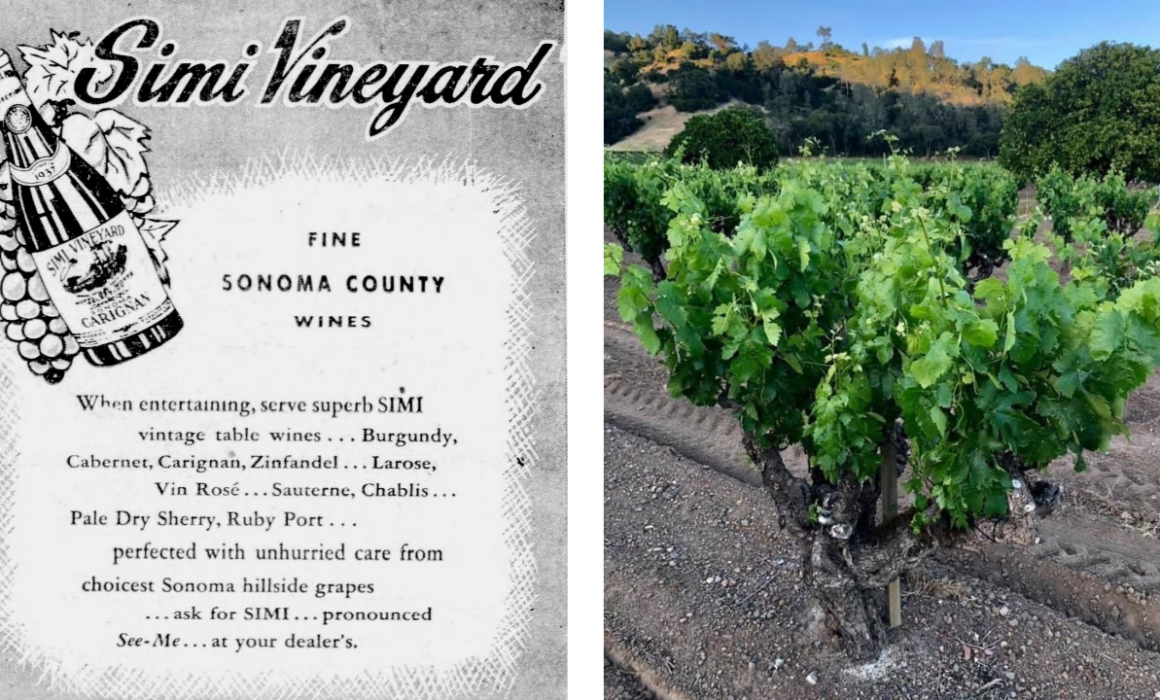
Carignan, Underrated No More
Carignan or Carignane, it can be spelled both ways, is one of Sonoma County’s heritage varieties, a meaty, concentrated red grape with structure and acidity that’s often folded into blends, quite often field blends in which Carignan is just one of many. Known for being spicy and bright in red berry flavors, it also works well on its own.
An important Mediterranean grape found across parts of Spain (originating from the village of Carinena in Aragon), Carignan is also widely planted in the Languedoc-Roussillon region of France, where it goes into reds and rosés. Interestingly, in Sonoma County it appears to have been planted most significantly by Italian families in places where they were also planting Zinfandel and other mixed grapes.
Early on, the variety worked well as a blender, often ending up in what California producers in the late 1800s labeled as Burgundy or Claret. During Prohibition, acreage grew from 12,000 acres to 28,000 statewide, much of that in the Central Valley. It was a popular option for shipping to home winemakers at the time, accounting for 10% of the wine grapes shipped east all on its own.
The Rhone Rangers brought Carignan back into the limelight in the 1980s as wine drinkers started to discover – or rediscover – these French-inspired offerings. The group defines Carignan as a late-ripening, vigorous variety that thrives in warm climates, adding color and tannins to blends but gaining in popularity as a standalone grape. International Carignan Day is the last Thursday of October (i.e., tomorrow).
Even so, numbers show that the amount of Carignan has declined across California. Whereas there were 7,177 acres of it in 2000, in 2025 that number dropped to 1,791.
Today it doesn’t even crack the top 13 red wine grape varieties planted in Sonoma County. However, what remains is worth exploring.
At Mancini Ranch in Russian River Valley, Carignan exists between rows of Zinfandel and other mixed black and mixed white varieties, the 16-acre vineyard originally planted in 1922 and 1924 by Luca Mancini. Reichwage Winery took over farming in 2015.
Dry Creek Valley’s Saini Farms bottles what it calls Trailer Block Old Vine Carignan, the Sainis first arrived in Sonoma County in 1917. The fifth generation farms it now. Wild Hog Vineyard between Cazadero and Fort Ross makes a Saini Carignan.
Preston Farm & Winery has 80-plus-year-old, deep-rooted Carignan. The winery says it was inspired to plant more of “what was already proven to do well here, and that was largely driven by the history of this neighborhood… Zinfandel and Carignan plus the darkly pigmented Petite Sirah.”
Peterson Winery grows Carignan on its Bradford Mountain Estate overlooking Dry Creek Valley. It also makes a Forchini Vineyard Carignan from vines planted nearly 80 years ago.
Bedrock Wine Co.’s Bedrock Vineyard Carignan is from vines planted in volcanic soils in 1888, and also described as part of the “secret sauce” in its Bedrock Heritage Wine, providing “deep purple color, spice, and lip-smacking freshness to the more Zinfandel-dominant blocks from the ranch.”
Bedrock calls Carignan one of the “most underrated grapes in California.” It also farms Nervo Ranch next door to Trione Winery, which has vines planted as far back as 1896 on steep slopes south of Geyserville, Carignan among them.
Carol Shelton has long worked with Oat Valley Vineyard in Alexander Valley to source from a mere three acres of nearly 100-year-old, head-trained Carignan vines. Planted in the late 1800s, it has been farmed by multiple generations of the Domenichelli and Cooley families.
Ridge works with the Buchignani Ranch on Dutcher Creek Road in Alexander Valley, producing a single-vineyard Carignan from vines planted originally in 1927 and expanded in the 1940s and 1950s. It tastes of black cherry, star anise, and dark chocolate, with silky structure.
Carignan may indeed regain favor after all these years for its ability to deal with heat and drought, retaining enough natural acidity to stay vibrant through long growing seasons. Some believe it is a grape built for the future. In Sonoma County, it’s a grape also of the past.
