
Champions of Sonoma County Wines Recognized
76 Restaurants from Across the Country and Mexico Receive Inaugural ‘Magnum Award’
SANTA ROSA, Calif. (September 2, 2025) – Seventy-six restaurants spanning from Graton, California, to Greenwich, Connecticut, are being honored with the 2025 Sonoma County Magnum Award for their exceptional support and promotion of Sonoma County wines. Earlier this year, Sonoma County Winegrowers launched this new initiative to recognize restaurants that demonstrate outstanding support for Sonoma County wines and showcasing Sonoma County as a world-class wine region. Each restaurant will receive a uniquely etched magnum bottle, symbolizing their role as an ambassador for Sonoma County’s farmers, winemakers, and wines.
During the year, Sonoma County wineries submitted nominations of restaurants they felt were deserving of recognition. Input was also provided by partners, trade, and sommeliers from throughout the country. Restaurants were selected based on key criteria, including their commitment to showcasing a diverse range of producers, vintages, and AVAs; fostering strong partnerships with wineries; hosting or promoting winemaker dinners and special events; and thoughtfully highlighting Sonoma County wines through curated lists and pairings that celebrate the region’s rich agricultural legacy.
“When it comes to promoting and celebrating wines from Sonoma County, these restaurants are the best of the best,” said Karissa Kruse, president and chief executive officer of the Sonoma County Winegrowers. She added, “We created this award to recognize and thank restaurants for their efforts to showcase our wine. Our hope is that people will see the Magnum recognition and continue to support both the restaurant and Sonoma County wines.”
The 2025 Magnum Award winners are:
SONOMA COUNTY
- Baci Café & Wine Bar – Healdsburg, CA
- Bird & The Bottle – Santa Rosa, CA
- Ca’Bianca – Santa Rosa, CA
- Cafe La Haye – Sonoma, CA
- Cucina Paradiso – Petaluma, CA
- Cyrus – Geyserville, CA
- El Dorado Kitchen – Sonoma, CA
- Glen Ellen Star – Glen Ellen, CA
- Goodnight’s Prime Steak & Spirits – Healdsburg, CA
- Guiso Latin Fusion – Healdsburg, CA
- Harbor House Inn – Elk, CA
- Hazel – Occidental, CA
- John Ash – Santa Rosa, CA
- Montage – Healdsburg, CA
- Monti’s – Santa Rosa, CA
- Osake Sushi – Santa Rosa, CA
- River’s End – Jenner, CA
- Single Thread – Healdsburg, CA
- Sonoma Pizza Co. – Forestville, CA
- Stark’s Steak & Seafood – Santa Rosa, CA
- Stella – Kenwood, CA
- Sushi Tozai – Sebastopol, CA
- The Girl & The Fig – Sonoma, CA
- The Matheson – Healdsburg, CA
- The Restaurant at Farmhouse Inn – Forestville, CA
- Timber Cove Resort – Jenner, CA
- Underwood Bar & Bistro – Graton, CA
- Valette – Healdsburg, CA
- Walter Hansel Wine & Bistro – Santa Rosa, CA
- Willi’s Seafood – Healdsburg, CA
- Willi’s Wine Bar – Santa Rosa, CA
- Willow Wood Market Cafe – Graton, CA
CALIFORNIA
- 71Above – Los Angeles, CA
- Angler SF – San Francisco, CA
- Charlie’s – St. Helena, CA
- EPIC Steak – San Francisco, CA
- Lazy Bear – San Francisco, CA
- Lucky’s – Montecito, CA
- Press – St. Helena, CA
- Rutherford Grill – Napa, CA
- Spago – Beverly Hills, CA
- Spruce – San Francisco, CA
- Stanly Ranch – Napa, CA
- The Ahwahnee – Yosemite, CA
- The Charter Oak – St. Helena, CA
- The Edge Palm Springs – Palm Springs, CA
- The Spinnaker – Sausalito, CA
- Wally’s Wine – Santa Monica, CA
- Waterbar – San Francisco, CA
UNITED STATES & BEYOND
- Annie Gunn’s – Chesterfield, MO
- Bern’s Steak House – Tampa, FL
- Blackberry Farm – Walland, TN
- Buck & Rider – Phoenix, AZ
- Canlis – Seattle, WA
- Eleven Madison Park – New York, NY
- Gramercy Tavern – New York, NY
- Joe’s – Chicago, IL
- Joe’s – Las Vegas, NV
- Joe’s – Washington, D.C.
- Manta– Waimea, HI
- Mastro’s – Houston, TX
- Meli-Melo – Greenwich, CT
- Pappas Bros. Steakhouse – Houston, TX – Galleria & Downtown
- Peak – New York, NY
- RPM Italian – Chicago, IL
- RPM Italian – Las Vegas, NV
- RPM Italian – Washington, D.C.
- RPM Seafood – Chicago, IL
- RPM Steak – Chicago, IL
- Summer House – Chicago, IL
- The Inn at Little Washington – Washington, VA
- The Little Nell – Aspen, CO
- The Palm – Orlando, FL
- The Palm – Mexico City, Mexico
- The Post Oak Hotel – Houston, TX
- Willie G’s – Houston, TX
About Sonoma County Winegrowers:
Sonoma County Winegrowers (SCW) is a marketing and educational organization committed to promoting and protecting Sonoma County as one of the world’s premier winegrowing regions. With more than 1,800 grape growers across 19 distinct American Viticultural Areas (AVAs), Sonoma County is recognized globally for its commitment to quality, sustainability, and innovation.
In 2014, Sonoma County Winegrowers led the charge for all local vineyards to become certified sustainable, resulting in 99% of the region’s vineyard acreage being certified by a third-party auditor—making Sonoma County the most sustainable winegrowing region in the world.
SCW continues to lead through its Farm of the Future initiative, establishing Sonoma County as a “living lab” for innovation and regenerative agriculture. This first-of-its-kind platform brings together global collaborators such as Ford Pro, John Deere, Wilbur-Ellis, and Agrology to accelerate climate-smart farming solutions.
Beyond the vineyard, SCW supports the people who power the wine industry through its 501(c)(3) foundation, which invests in vineyard employees and their families. This includes a pioneering Leadership Academy designed to elevate the next generation of agricultural leaders.
SCW’s dynamic marketing efforts extend nationwide through partnerships with brands and organizations including Landry’s, Lettuce Entertain You, the San Francisco Giants, Houston Rockets, Chicago Bears, Coachella Valley Firebirds, and Food & Wine magazine—sharing the story of Sonoma County’s heritage, innovation, and excellence with new audiences across the country.
Contact: John Segale | John.Segale@fahlgren.com | (916) 600-1081
Before baseball’s Giants, San Francisco had the Seals
By: Virginie Boone
Most San Francisco Giants fans know that the team originated in New York, arriving in San Francisco in 1958, the same year the dreaded Brooklyn Dodgers relocated to Los Angeles. What many might not know is that before the SF Giants, there was a popular team who played in San Francisco called the Seals.
The Seals were part of the Pacific Coast League (PCL) founded in 1903 that played across the West Coast, with teams from San Diego to Vancouver. The PCL existed because Major League Baseball (MLB) did not have teams west of St. Louis through the first half of the 20th century and there was no such thing as televised baseball games. The PCL often drew bigger crowds than MLB teams however, with a longer season due to better weather, and this was true of the Seals, who by the late 1940s were bringing in 670,000 fans a year.
The Seals originally played at Recreation Park at the corner of 14th and Valencia Streets, which we would consider the Mission District today. They later moved to Seals Stadium at 16th and Bryant south of Market Street, a ballpark they shared with the Mission Reds. The Oakland Oaks were the Oakland team and a frequent foil.
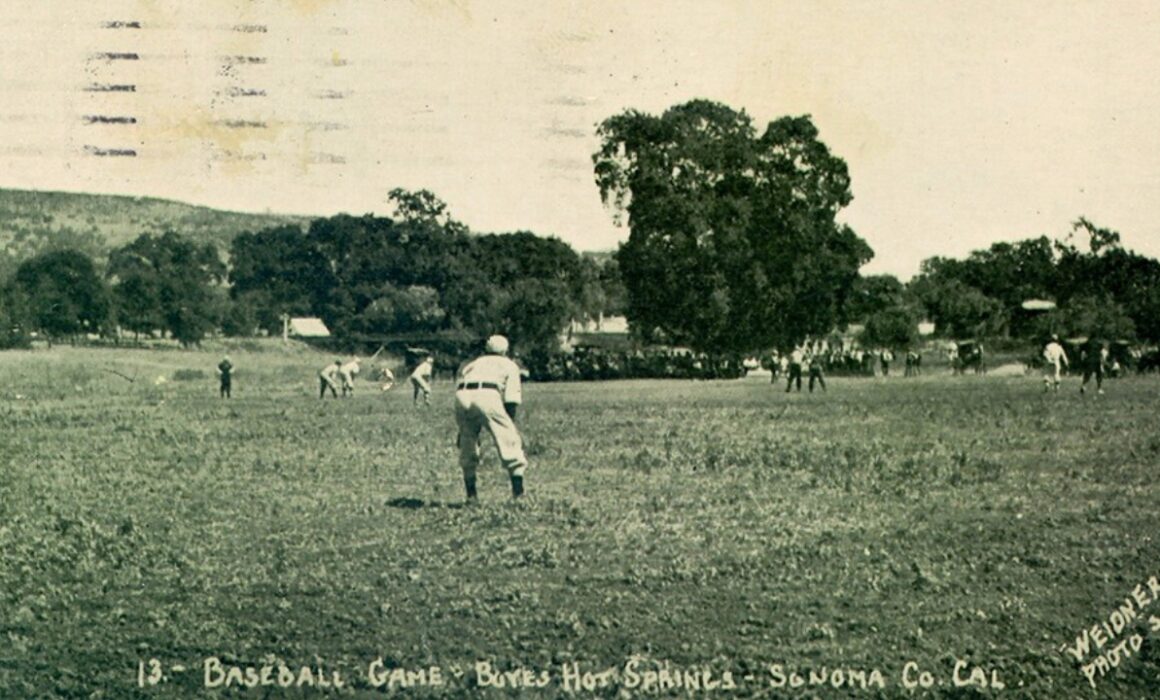
The Seals came north to Sonoma County to Boyes Hot Springs for their spring training, choosing the location after a statewide competition. Exhibition games were played in an eight-acre baseball-minded park built on hotel property with “large swimming tank, hot and cold-water baths, plunges, a gymnasium, and the best climate in California,” as reported in a 1912 edition of the Sausalito News.
The SF Chronicle at the time added, “it seems certain that the Seals will have the largest ball ground in the world.”
The field, known as Fetters Field and later Lichtenberg Field, is said to have lasted through the 1950s next to the Boyes Bath House, being surrounded by the Olive Grove subdivision in 1947 and eventually replaced entirely by housing. The Oakland Oaks also trained in Boyes Hot Springs.
Former PCL and MLB player Sam Agnew (famous for being the catcher for Babe Ruth when he pitched in the 1918 World Series) was on the SF Seals from 1920-1927 and eventually made Boyes Hot Springs his home, opening a Union Oil service station in 1935 at Highway 12 and Vallejo Street (across from present-day Fairmont Sonoma Mission Inn).
The Seals are where a famous trio of brothers got their start – the DiMaggios, Joe, Dom and Vincent, who would go on to major league fame, particularly Joe DiMaggio, a 13-time All-Star and 9-time World Series champion with the New York Yankees, who also happened to marry Marilyn Monroe at San Francisco City Hall.
From 1935-51, the Seals team was managed by former star player and SF native Lefty O’Doul (whose first name was actually Francis Joseph), who had played both in the PCL (for the Seals) and for the MLB Philadelphia Phillies and New York Giants. His era is considered the height of the PCL, and he eventually became the winningest manager in PCL history.
O’Doul is also credited for taking baseball exhibition tours to Japan, training players there in the game and having the Tokyo Giants named in his honor. The Lefty O’Doul Bridge is the one that connects Oracle Park to China Basin and there’s also a gate entrance at Oracle named for O’Doul.
San Franciscans for decades also enjoyed Lefty O’Doul’s Restaurant and Cocktail Bar on Geary Street in Union Square, which he founded in 1958 and ran for years (O’Doul died in 1969). Famous for its hofbrau, piano bar, baseball memorabilia and Bloody Marys, it closed, sadly, in 2017.
The Seals won their last PCL pennant in 1957, soon to be replaced by the MLB teams that came west. The San Francisco Giants played in Seals Stadium for their first two years in the city, bringing superstar-in-the-making Willie Mays with them – he would play for the Giants through 1972. Those first two years Giants Orlando Cepeda and Willie McCovey won back-to-back Rookie of the Year awards.
Candlestick Park became the Giants’ new home in 1960, where such greats as Juan Marichal, Gaylord Perry, and Matty, Felipe and Jesus Alou shined through the 1970s when the team was almost moved to Toronto before Bob Lurie came in to buy it in 1976. In 1989 the Loma Prieta earthquake shook Candlestick during game three of the Giants World Series against the Oakland A’s, with Oakland eventually winning the championship.
In 1992 Lurie sold the team to a new ownership group led by Peter Magowan, promptly signing Barry Bonds to the team, who continued to dominate as a hitter through the team’s move to downtown Oracle Park in 2000 after four decades at Candlestick. Bonds played with the Giants until 2007, the same year he broke Hank Aaron’s record for home runs.
Then came the glory years of 2010 through 2016, when the Giants won World Series in 2010, 2012 and 2014 behind the greatness of manager/wine lover Bruce Bochy and players Tim Lincecum, Edgar Renteria, Buster Posey, Matt Cain, Pablo Sandoval, Madison Bumgarner and so many others.
In the ensuing decade things have gone up and down for the SF Giants, but there’s hope in Posey’s takeover of the team beginning with the 2024 season. We’ll see. But win or lose, the SF Giants are our team, representing over a century’s worth of baseball in the city.
Love the SF Giants, love wine? Consider joining the Giants Wine Club in partnership with Sonoma County Winegrowers, the first-ever MLB wine club focusing on the wines of Sonoma County.
Image By: Sonoma Valley Historical Society
Grab a Glass, See a Show
By: Virginie Boone
Earlier this month, The Washington Post published a story by Diana Lind, a fellow at the Center for Economy and Society at Johns Hopkins University, called, “America is becoming a nation of homebodies,” detailing how people are spending far more time at home than they used to and the costs to such isolation. The data was concerning.
“Americans now spend an average of 99 more minutes at home each day than they did in 2003, while this generation of 15- to 24-year-olds spends 124 more minutes at home than their counterparts two decades ago. Meanwhile, just 30 percent of Americans spent time socializing and communicating in person on an average day, down from 38 percent in 2014.”
The piece went on to add that time in the house is more likely to be time spent alone and sedentary and suggested that part of the solution needs to be “finding real-life environments and activities that can compete for attention with apps and streaming services at home.”
Other solutions such as walkable neighborhoods and making it easier for the private sector to revive social life through brick-and-mortar businesses were also proposed as ways to get people out of their homes.
“But it all starts with changing how we view the outside world on a personal level,” it said. “We should treat ‘getting out’ as a necessary health intervention rather than an optional luxury or a work burden. This might mean budgeting time and money differently, recognizing that the cheapest and easiest option – staying in – is costing us something else. Our health and our communities are worth the extra effort.”
We live in a beautiful, dynamic, and culturally rich place here in Sonoma County, with so many ways to get out, whether it be in nature, at a winery, restaurant, festival, or live music/theatrical venue. Need a few ideas?
The Sonoma County Chapter of Les Dames D’Escoffier holds its second annual Birds and Bubbles fundraiser Sunday August 24 at Bachhus Landing in Healdsburg, a fried chicken and local sparkling wine feast that supports women in food, fine wine, and hospitality. Duskie Estes and John Stewart will make the fried chicken, as local chefs from Jackson Family Wines, Catelli’s, Jimtown and then Sum, The Spinster Sisters, Spread Kitchen, Mad Batter Bakery and more offer other menu items. Alegria Vineyards and Comstock Wines are among the sponsors. Live music, bocce and more.
Dance and sing along to Bohemian Queen at Luther Burbank Center for the Arts this Saturday, August 16, a Queen tribute band celebrating the 50th anniversary of Queen’s first tour of America. Rodney Strong Vineyards and Breathless Sparkling Wines are both sponsors of the event venue, and their wines are featured on the concessions menu.
Festa Italia di Healdsburg will take place this Sunday, August 17 at Orsi Family Vineyards, a celebration of Italian grapes farmed in California. More than 25 California wine producers will be on hand, with food vendors like A16 and its wood-fired pizzas, Valley Ford Cheese & Creamery, Graffeo, and Fiorello’s Artisan Gelato. The day also features two wine panel discussions, one on Growing Italian Grapes in California and the other on Winemaking with Cal-Ital Grapes. Ticket sales benefit the Italian Catholic Federation in Healdsburg.
Pink Martini featuring China Forbes is on the schedule at Green Music Center for August 21, both in Weill Hall and the Lawn. Pink Martini has sold over 3 million albums worldwide and crosses genres from classical and jazz to pop. Summer dining options include pre-ordered boxed meals from Boudin, burgers and pizza from the on-site grill, food truck options from Indian Village Eats, and local wines from Matanzas Creek, Murphy-Goode, and Korbel.
New Sonoma County Winegrowers’ Wine Club partner the San Francisco Giants will play the Tampa Bay Rays this Saturday, August 16 for a 6 pm game followed by postgame concert featuring Northern California Grammy-nominated music star Saweetie.
If you prefer tribute bands that honor ABBA rather than Queen, you’re in luck as Summer Night City The ABBA Tribute is scheduled for Saturday, August 16 at the Mystic Theatre in Petaluma. Don’t miss “Mamma Mia,” “Dancing Queen” and all the hits. A lobby bar serves drinks, while food can be ordered from the venue’s McNears Restaurant next door.
Transcendence Theatre Company has two more outdoor theatre shows going this summer. One is “Beautiful, The Carole King Musical,” a Tony Award-winning Broadway musical based on the true story of the singer/songwriter behind 100 hit singles and six Grammys. The show takes place in downtown Sonoma’s Field of Dreams with local food and wine vendors like Benziger, Vaughn Duffy, Hopmonk Tavern and others providing dinner and drinks on site. It runs through August 17. A different show, “Ladies of Broadway,” is set for September 4-14. Among other impacts, in the decade that Transcendence has been performing in Sonoma County, it has raised $800,000 for Jack London Historic Park and other non-profits.
These are just a few of the things happening right now in Sonoma County. Make the extra effort, get out into the community and leave the homebody behind.
San Francisco Giants Announce Giants Wine Club, Presented by Sonoma County Winegrowers
First-ever MLB wine club features a diverse selection of wines, further solidifying the Giants’ connection to wine country.
SAN FRANCISCO (August 7, 2025) – The San Francisco Giants today announced the Giants Wine Club in partnership with Sonoma County Winegrowers. Now available, the membership-based program features a series of premium Sonoma County wines and is a celebration of the club’s rich history, Northern California wine country and the iconic grape varieties of Sonoma County.
Giants Wine Club members will receive three releases each year, including six bottles from six different Sonoma County wineries, shipped in February, May and November. Memberships are available to California residents at Home Run or Grand Slam levels, differentiated by the grapes and wine pricing. Wine will be hand-selected by Giants and first-ever professional sports team Master Sommelier, Evan Goldstein – one of 279 Master Sommeliers worldwide who’s been voted twice into IntoWine.coms “Top 100 Most Influential People in the US Wine Industry”.
With this announcement, the Giants continue to underscore their commitment to providing fans with nothing like it experiences. Giants Wine Club members will receive exclusive benefits, including private wine tasting events, educational wine webinars with Evan Goldstein and Sonoma County winemakers and winegrowers and offerings at select Sonoma County wineries.
“We are thrilled to introduce the Giants Wine Club, showcasing the bounty of fine wines across Sonoma County,” said Steve Tseng, Senior Vice President of Partnerships at the San Francisco Giants. “This expanded partnership is a natural evolution as our fans are increasingly looking to experience local wine culture while enjoying a baseball game – whether at Oracle Park or at home.”
The Giants’ ballpark has long been known for providing an extensive assortment of world class wine, dating back to Opening Day 1977 at Candlestick Park when in-stadium wine service was first introduced to Major League Baseball fans. Today, Oracle Park features a dedicated wine bar on each level, California Wine Carts along the Promenade and View Levels and seven locations that offer wine on tap. In 2022, the Giants appointed Evan Goldstein as the organization’s Master Sommelier, becoming the first-ever global professional sports team to add a Master Sommelier to its lineup.
“Wine, like baseball, is an experience – it creates and impacts memories and brings people together,” said Goldstein. “Many fans don’t know that wine and baseball can interact both inside and outside the ballpark. This is why I’m excited to help bring the Giants Wine Club to life, creating more unmatched experiences for Giants fans beyond Oracle Park and providing them with access to a premium selection of wines from the iconic Sonoma County.”
“Sonoma County wine and Giants baseball are a natural pairing—each rooted in tradition, passion and a love for bringing people together. That’s why we’re thrilled to expand our partnership with the San Francisco Giants through a first-of-its-kind wine club, featuring world-class wines from Sonoma County, created exclusively for Giants fans,” said Karissa Kruse, President and CEO of Sonoma County Winegrowers. “Both the Giants and Sonoma County Winegrowers are dedicated to crafting experiences that are distinctive, elevated and memorable. With the expertise of the first Master Sommelier in MLB curating the selections, this club is sure to captivate both devoted wine lovers and curious fans alike.”
Click Here to Learn More
About San Francisco Giants:
One of the oldest teams in Major League Baseball, the 142-year old franchise moved to San Francisco from New York in 1958. After playing a total of 42 years in Seals Stadium and Candlestick Park, the team moved to the privately constructed, downtown ballpark on the corner of 3rd and King in 2000. The organization is widely recognized for its innovative business practices and baseball excellence having been named in the past decade the Sports Organization of the Year by Street & Smith’s Sports Business Journal, Organization of the Year by Baseball America and ESPN’s Sports Humanitarian Team of the Year. Oracle Park is also the only ballpark in the country to have earned Silver, Gold and Platinum LEED certification for an existing building.
Since opening its gates, Oracle Park has become internationally-renowned as a premier venue in the world of both sports and entertainment. On the diamond, more than 75 million spectators have witnessed countless magical moments, including three World Series Championships (2010, 2012 & 2014), the raising of four National League Pennants and eight playoff appearances. The ballpark has also hosted some of music’s biggest acts, including Lady Gaga, Beyoncé & Jay Z, Ed Sheeran, the Rolling Stones, the Eagles, Bruce Springsteen and the E-Street Band, Green Day and Billy Joel.
About Sonoma County Winegrowers:
Sonoma County Winegrowers (SCW) is a marketing and educational organization committed to promoting and protecting Sonoma County as one of the world’s premier winegrowing regions. With more than 1,800 grape growers across 19 distinct American Viticultural Areas (AVAs), Sonoma County is recognized globally for its commitment to quality, sustainability, and innovation.
In 2014, Sonoma County Winegrowers led the charge for all local vineyards to become certified sustainable, resulting in 99% of the region’s vineyard acreage being certified by a third-party auditor—making Sonoma County the most sustainable winegrowing region in the world.
SCW continues to lead through its Farm of the Future initiative, establishing Sonoma County as a “living lab” for innovation and regenerative agriculture. This first-of-its-kind platform brings together global collaborators such as Ford Pro, John Deere, Wilbur-Ellis, and Agrology to accelerate climate-smart farming solutions.
Beyond the vineyard, SCW supports the people who power the wine industry through its 501(c)(3) foundation, which invests in vineyard employees and their families. This includes a pioneering Leadership Academy designed to elevate the next generation of agricultural leaders.
SCW’s dynamic marketing efforts extend nationwide through partnerships with brands and organizations including Landry’s, Lettuce Entertain You, the San Francisco Giants, Houston Rockets, Chicago Bears, Coachella Valley Firebirds, and Food & Wine magazine—sharing the story of Sonoma County’s heritage, innovation, and excellence with new audiences across the country.
Contact:
Sophie Lair | slair@sfgiants.com | (415) 972-2492
John Segale | John.Segale@fahlgren.com | (916) 600-1081
Never Sleep on Sonoma County Merlot
By: Virginie Boone
For a long time, Merlot has held steady as one of the top three red wine grapes in Sonoma County, even during the rise of Pinot Noir. Today it’s dropped down to fourth, trailing Pinot, Cabernet Sauvignon and Zin, with Merlot and Zin each accounting for about 4,000 acres in the region as of 2023. That makes it a still-important variety here and there are many proper Merlot bottlings well worth seeking out, a great wine with food, supple in texture with herbal complexity often unfettered by obtrusive tannin and oak.
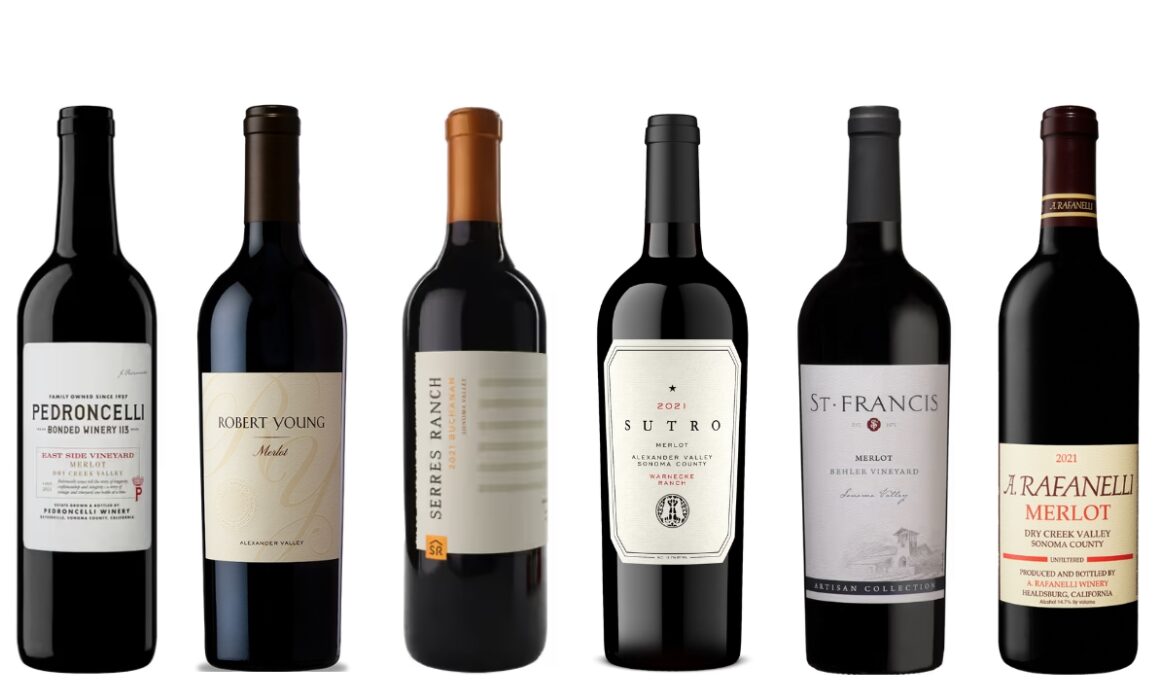
A. Rafanelli Winery 2022 Merlot
The historic Dry Creek Valley producer so beloved for Zinfandel also makes a lovely Merlot from estate grapes, inspired by the best of Bordeaux, blending 20% Cabernet Sauvignon for a full-bodied, lushly textured wine of tremendous sophistication.
Benziger Family Winery 2021 Sunny Slope Merlot
The winery has long made Merlot, ever since its early days as Glen Ellen Winery and the days of fighting varietals, a line of wine during the 1980s labeled as varietals instead of generic. Farmed biodynamically, the wine has been made from the same vineyard in Sonoma Valley for three decades.
Ferrari-Carano Vineyards & Winery 2019 Merlot
The Dry Creek Valley winery blends Syrah and Petite Sirah into its Merlot, grown at high-elevation, giving it a long time in French oak barrels to age. It’s a classic rendition, softly textured and spicy in dried herb and clove.
Gundlach Bundschu Winery 2022 Merlot
The Sonoma Valley family winery has stuck with Merlot through thick and thin, always believing in its particular promise in cooler climes and formidable versatility, wherever it’s grown, offering lush elegance and spicy berry fruit.
Matanzas Creek Winery 2017 Jackson Park Vineyard Merlot
The Bennett Valley winery helped usher in Sonoma County’s modern Merlot era since its founding in 1977, and continues to produce not one, not two, but four Merlots, one from Bennett Valley, one from Alexander Valley, this vineyard designate from Jackson Park Vineyard, and even one from the Keyes Vineyard on Howell Mountain. Jackson Park was planted in 1984 to 90 acres of the Petrus clone of Merlot, also known as clone 181.
Medlock Ames Winery 2020 Yarrow Merlot
From grapes grown at the producer’s Bell Mountain Ranch estate where after the 2019 Kincade Fire destroyed much of the acreage, yarrow, a type of native wildflower, began to bloom. The wine was named for this symbol of nature’s resilience and ability to bounce back, something we should all aspire to. Both clone 181 and the Jefferson clone of Merlot grow here.
Pedroncelli Winery 2022 East Side Vineyard Merlot
Another Dry Creek Valley Merlot of beauty and balance, the family’s East Side Vineyard is a mile west from the winery on the benchlands of the appellation. The Merlot off the estate is smoothly textured and lush, with sumptuous black fruit.
Robert Young Estate Winery 2021 Estate Merlot
The Alexander Valley family winery is so well-known for Cabernet Sauvignon and Chardonnay one might forget they do other wines, too, like this estate Merlot. Sourced from hillside vines in Meek’s Block, the name of Robert Young’s uncle who helped save the ranch during the Depression, only 22 barrels of this 100% Merlot were produced, an exemplar of balanced winemaking.
Rodney Strong Vineyards 2022 Merlot
The Healdsburg-based winery sources from across Sonoma County to make this wonderfully value-minded Merlot, honoring its heritage as one of the first to plant the variety in the Alexander Valley in the 1970s. It overdelivers on its $25 price point, lush and generous in dark fruit and French oak spiciness.
Serres Ranch Wine 2021 Buchanan Merlot
With 12% Malbec, this Sonoma Valley Merlot is named for Buchanan (Buck) Serres, a member of the family’s sixth generation, who have been farming in Sonoma County since 1924.
St. Francis Winery & Vineyards 2021 Behler Vineyard Merlot
The Sonoma Valley-based winery is another longtime proponent of Merlot, making three different bottlings every year. This one comes from its well-known estate, its first, the legacy of founder Joe Martin, the first to plant Merlot in the area in the 1970s.
Sutro Wine Company 2021 Merlot
This small family producer on Chalk Hill Road in Alexander Valley sources from its own Warnecke Ranch and Vineyard to make this wine, blending just a handful of Malbec into the mix, coaxing lovely aromatics and subtle herbal earthiness from the Merlot.
The Century Club: Saini Farms
By: Virginie Boone
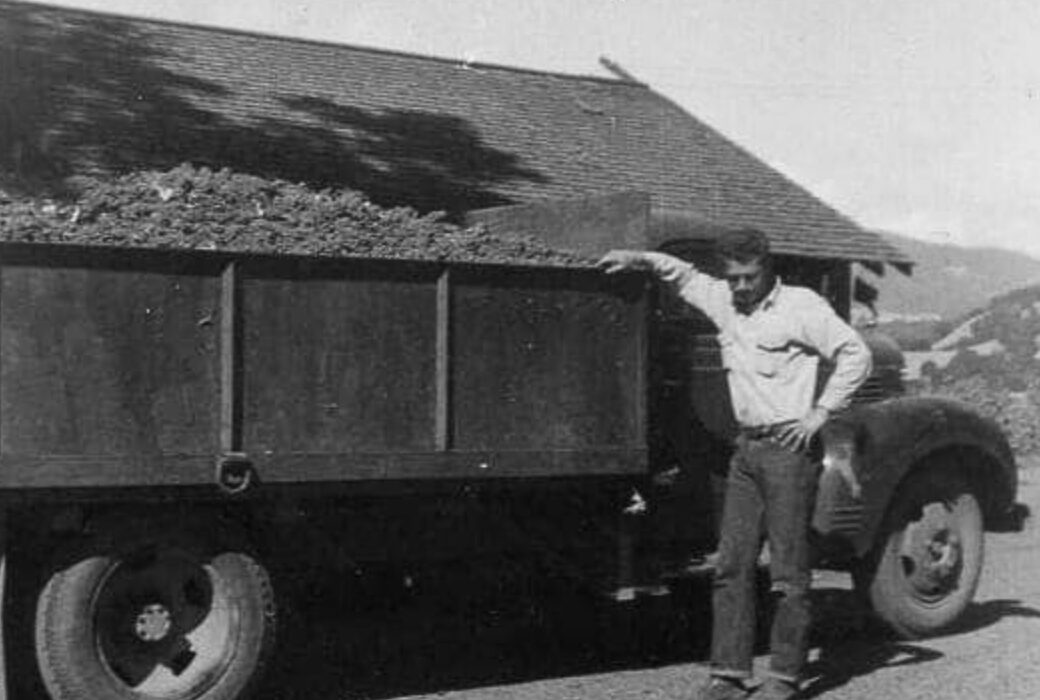
The year was 1908 when Michele (sometimes also written as Michael) Saini came from Genova, Italy to San Francisco to work as a garbage man. By 1917 he and his brother-in-law John Cuneo, an apprentice shoemaker, were able to buy a ranch in Dry Creek Valley they called Cuneo & Saini.
Starting out as so many did with crops like prunes, apples and pears, wine grapes eventually followed, as did the purchase of more land in Alexander Valley. John Cuneo’s wife Emilia, who was Saini’s sister, was credited with founding St. John’s Parochial School in Healdsburg in the early 1930s. In addition to being a member of the Dry Creek Farm Bureau, she was a 52-year member of the Young Ladies Institute and charter member of the Italian Catholic Federation; her other brother was Reverend Joseph Saini.
John and Emilia Cuneo had a son named Gene. Back in 1950s Dry Creek Valley, prunes from neighbors’ orchards would be custom dried at the Gene Cuneo dehydrators in the valley.
“I think it’s the best place in the country,” Gene Cuneo, a past director of the Dry Creek Farm Center, told the Press Democrat about Dry Creek Valley in December 1951.
It was reported that Gene operated a 9-car one tunnel dehydrator that could turn out 195 tons of dried prunes in a 34-day season with a five-man crew. Over time they took out prunes on the benchlands and put in grapes.
By the 1970s Gene Cuneo and his cousin Gene Saini, who went by Si, were growing 120 acres of prunes and 90 acres of grapes on Dry Creek Road, growing such grape varieties as French Colombard, Ruby Cabernet, Zinfandel and Carignane, as detailed in a 1970 PD story.
When Gene Cuneo passed away in 2007 at the age of 94, his obit described him as a second-generation rancher and grape grower who was four years old when his parents moved to Dry Creek Valley. He lived there for 89 years. Si died the year before. They were in business together for more than 56 years, following in the footsteps of their own fathers, John Cuneo and Mike Saini.
In addition to supporting many other organizations, Gene Cuneo was part of The Healdsburg Heritage Project, founded in 2005 to honor industry pioneers and the area’s cultural heritage. He was among those honored at its opening event, Enduring Spirit: Ten Lives of Healdsburg.
Gene Cuneo also helped found the California North Coast Grape Growers Association in 1962, representing 800 members across Sonoma County, Napa and Mendocino. For his efforts, he was presented with a California State Senate Certificate of Recognition by Senator Mike Thompson in 1993.
For his part, Si Saini, father to the third-generation’s John Saini and grandfather to fourth-generation Michael and Brian Saini, had lived through the loss of his own brother (also named John) during World War II. In addition to serving in the Navy, he served as a volunteer fire fighter for Geyserville. A plaque commemorates his time as “Asst. Chief Gene (Si) Saini.”
The third generation established Saini Farms, Inc. in 1985, followed by the creation of Saini Vineyards by the fourth generation, Mike and Laura Saini, in partnership with Mike’s parents John and Patti Saini and friend George Christie. Together they launched an estate-grown wine label in 2008, with Julia Iantosca making the wines. A fifth generation is now learning the ropes.
Experience a part of Dry Creek history by visiting Saini Vineyards. Tours are possible by appointment Thursday through Sunday from noon to 4pm, 2507 Dry Creek Road in Healdsburg.
One Hundred Wine Varieties and Counting: Sonoma County’s Alegría Vineyards
By Virginie Boone
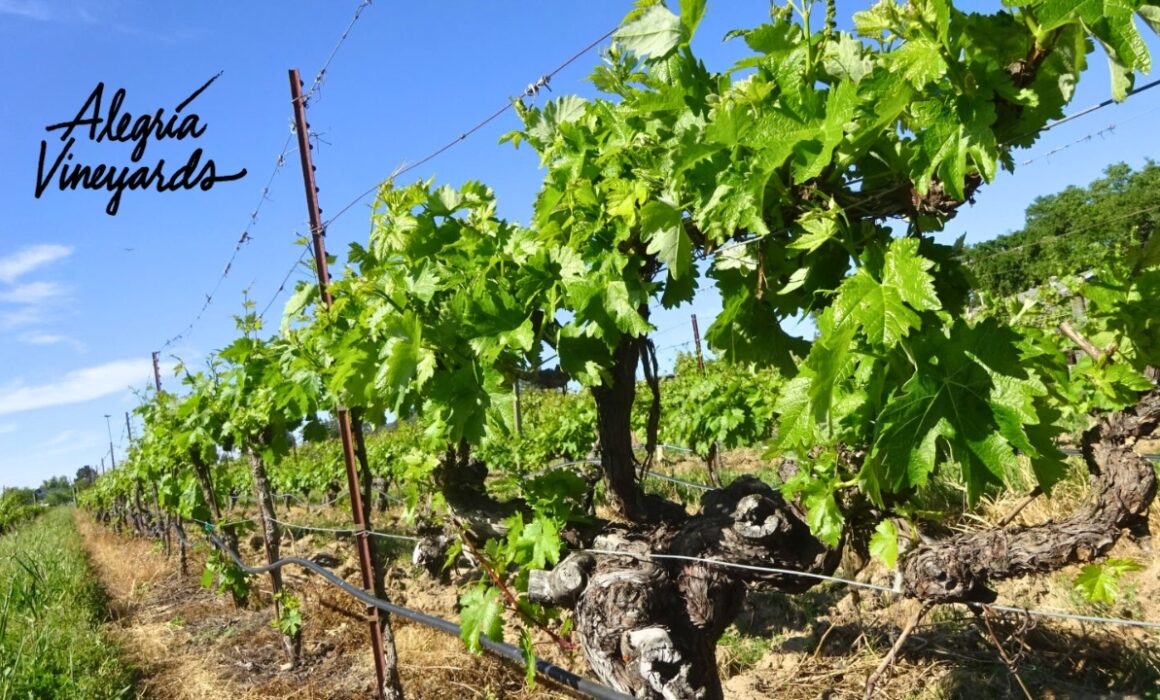
In 1990, Bill and Betsy Nachbaur bought a century-old vineyard along Sonoma County’s Old Redwood Highway near Healdsburg, knowing it was planted to a field blend of all sorts of grapes like Zinfandel, Alicante Bouschet, Petite Sirah and more, which could trace their roots back to 1890. There was also Sangiovese and Zinfandel growing together put in the ground in 1950.
The couple named the vineyard Alegría, after the word for happiness and joy in both Spanish and Portuguese.
The total expanse of the site is 32 acres, with some of that added to the estate by the Nachbaurs, who put in new plantings in 1991, 1992, 1997 and 2017, including field blends of some of its first whites, Gruner Veltliner and Alvarinho. They also added more Sangiovese and Syrah after seeing both thrive in the older parcels and added Cabernet Franc and Dolcetto.
But what many probably don’t realize is that Alegría’s viticultural diversity is more vast than the entirety of Sonoma County when it comes to the types of grapes growing within the confines of those 32 acres. In fact, there are 108 grape varieties in that dirt, many of them barely in existence in their own home countries let alone the New World.
These include such rarities as Black Monukka from Uzbekistan, a crunchy seedless table grape, and Blaufraenkisch/Limburger from Slovenia. There’s Corinth from Greece , which when dried become known as Zante currants, and Petit Beclan from France, a nearly extinct grape from the Jura, as well as Gros Beclan, also known as Peloursin. Spain’s Palomino and Pedro Ximenez grapes exist here, and Italy’s Canaiolo Nero, Nebbiolo, Sangiovese and Sagrantino.
And so much more, including hybrids from other parts of the United States, like Einsett from New York, created by Cornell University crossing Fredonia and Canner seedless grapes; Suffolk, another seedless red table grape; and Royalty (a red wine grape created by Dr. Harold Olmo at UC Davis in 1938), Rubired (another Olmo hybrid that crosses Tinto Cao and Alicante Ganzin), and Ruby, another seedless, from California.
This is a literal treasure trove of grape varieties. The Nachbaurs trace the vineyard’s original plantings to George and Summers Brumfield whose family settled in Sonoma County in 1852 by way of West Virginia. At one point they owned 850 acres, including present-day Ponzo Vineyards across the highway. Records show they started by growing Zinfandel and Mission grapes, some of the Mission vines still in existence when Betsy and Bill came along in 1990.
A winery was built during the tenure of Elizabeth Moes, between 1896 and 1924. Her daughter Ernestine and son-in-law Adolph DiNucci kept the by-then 40-acre property farmed during Prohibition until 1943. Americo Rafanelli bought it in 1947, adding the plantings of Zinfandel with Sangiovese. A few more owners came afterwards, until that fateful day in 1990 when the Nachbaurs sensed that this Russian River Valley piece of history would be a part of their history too.
Bill and Betsy started out by selling the grapes to such great local producers as Ridge, Rosenblum, Rock Wall and JC Cellars, and continue to sell their grapes today. For three decades they maintained their own wine brand, Acorn Wines, but decided to sell that a few years ago to Ancient Oak Cellars owner Melissa Moholt-Siebert.
Today they remain farmers of this extraordinary viticultural wonderland, with its over 100 varieties, a living lab of historic field blends from all over the world.
Image By: Daniel Mangin
