
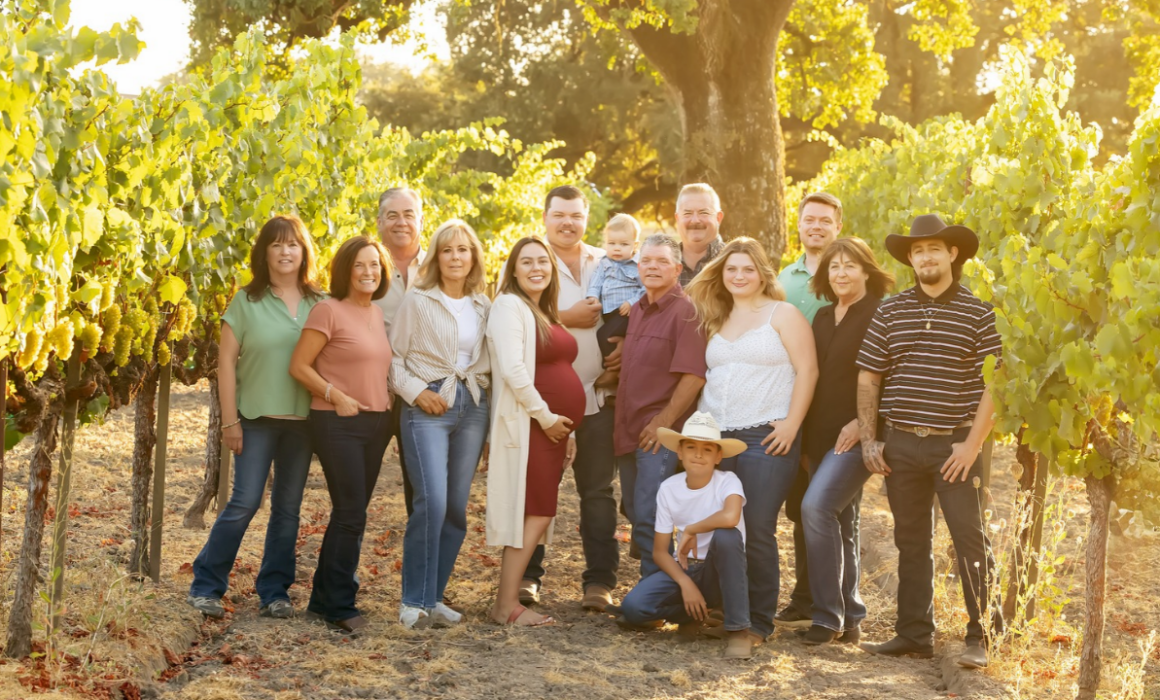
Farming Since 1853: The Cameron Ranch Story
The year was 1853 when 480 acres west of Fulton were sold to Alonzo Meacham, a portion of the Rancho San Miguel land grant. Originally from Ohio, Meacham had come to San Francisco from Baltimore by ship in 1849 lured by the discovery of gold in California.
He and a fellow shipmate, Barney Hoen, however decided to become suppliers rather than miners, opening a general store on the corner of California and Montgomery streets in San Francisco. But a fire in 1851 destroyed the building.
Hoen took off for Oregon. But Meacham, as historian Gaye LeBaron once detailed in the Press Democrat, “had come to see a friend [in Santa Rosa], Donald McDonald, who was running a trading post and wayside inn with a partner, David Mallagh, in an adobe that had been the original rancho home of Mallagh’s wife, Juana Carrillo.”
Meacham bought the business and land from Julio Carrillo, a tract of 70 acres for $12 an acre. Meacham then became the first postmaster of Santa Rosa, establishing a post office at the old adobe. He later sold those 70 acres to former business partner Barney Hoen and his partners, F.G. Hahman and William Hartman, for $1,600, which they then used to lay out the town of Santa Rosa.
In 1853, the 480 acres west of Fulton were sold to Meacham, whose daughter Elvira and her Scottish husband, Reverend Donald C. Cameron, eventually purchased the property.
In those early years Zinfandel was planted, as was Riesling and Chasselas. Hay, wheat, corn, tobacco, Gravensteins, peaches and prunes, and sheep, cows, horses, and chickens followed.
Hops were added in the early 1900s, along with two hop kilns. Grace Brothers Brewery leased the kilns for many years after buying out William Metzger, who had started the first Santa Rosa steam beer brewery in 1872, selling beer for a nickel a glass.
Brothers Frank and Joseph Grace were grocers, running a spot on Fourth and A Street, and brewed lager and steam beer until Prohibition hit, surviving the period by pivoting as an ice house and ice cream and bottling plant. At one point Frank served as sheriff of Sonoma County. Grace Brothers shut down in the 1960s.
The Camerons went back to grapes in 1960, pulling out prunes and adding French Colombard. The sixth and seventh generations of Camerons have continued that viticultural legacy, farming Chardonnay, Pinot Noir, Pinot Gris, Sauvignon Blanc, and that French Colombard along River Road. Other family members farmed neighboring vineyards for years, with grapes going to Clos Du Bois and Korbel.
Donald and Elvira Cameron had two sons, Charles Wesley and Bruce. The boys ran the Cameron Ranch for 40 years. As a state delegate, Charles Wesley is also credited with helping to establish Cal Farm Insurance.
Charles Wesley’s son Wes took over the ranch in 1961 after his father’s death, and in 1964, according to a Prince of Pinot account, the ranch was split and 35 acres became known as the Wes Cameron Ranch. Along the way, Wes served as president of Sonoma County Farm Bureau and was known for being a strong advocate of private property rights, also running an irrigation business called Rain-ow Irrigation Co.
After Wes’s death in 1993, his widow Dorothy operated the ranch for many years with the help of her son Butch Cameron and son-in-law David Cornelssen. Dorothy passed in 2017.
The Cameron family is recognized as one of Sonoma County’s Century Club members, farming continuously for more than 100 years. That 70-year-old-plus French Colombard is a treasured commodity, being made into wines by Woodenhead, Hanna, and Marchelle Wines from Wes Cameron Ranch. A piece of history, they’re worth trying.
